
Việt Nam is moving to develop its own railway manufacturing industry as part of a massive infrastructure expansion worth an estimated $100 billion, aiming to reduce reliance on foreign suppliers and strengthen domestic industrial capacity. A new government decree issued on December 12 sets out clear rules allowing Vietnamese companies to compete for technology transfer and manufacturing contracts linked to major rail projects.
The policy shift comes as Việt Nam prepares to invest up to $64 billion over the next two decades in a high-speed rail line running from north to south. When combined with urban railway projects in major cities, spending on trains, tracks, signalling systems and related equipment is expected to exceed $100 billion by 2050. Technology and equipment alone could account for around 40% of total project costs.
Under the new rules, eligible companies must have operational factories, sufficient financial capacity, and a skilled workforce capable of operating advanced equipment independently. Firms are also required to have prior experience working with international partners on technology projects, ensuring smoother transfers and lower risks. Companies facing bankruptcy or regulatory violations are excluded.
Officials say the changes will allow domestic firms to move beyond low-value subcontracting roles and gradually master advanced railway technologies. The framework also opens competition to private enterprises, placing them on equal footing with state-owned and foreign-invested companies, which could create long-term momentum for the national railway industry.
Việt Nam plans to build 25 railway lines spanning more than 6,300 kilometres by 2050, requiring millions of metres of rail, tens of millions of concrete sleepers, and large fleets of locomotives and train cars. The government has set a target for the country to be capable of producing its own trains and railway equipment by 2045.
Several major domestic companies are already preparing to participate. New investments in specialised steel rail production, train car manufacturing, electrical systems, signalling technology and heavy engineering are expected to reduce project costs by up to 20% while creating hundreds of thousands of skilled jobs across the country.
Việt Nam Pushes to Build Homegrown Railway Industry with $100 Billion Investment Drive
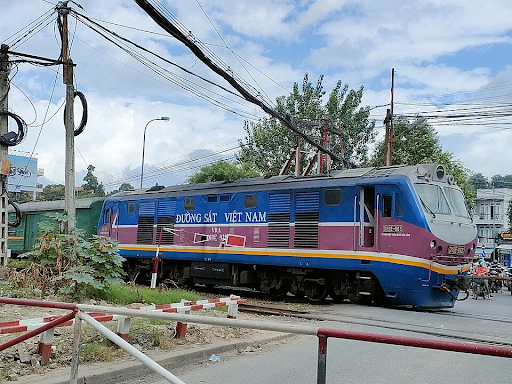
Picture Credit: www.commons.wikimedia.org
70