
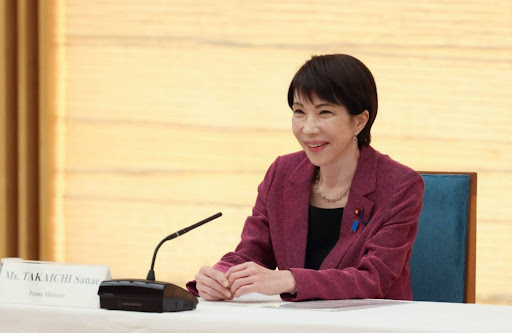
Prime Minister Sanae Takaichi has confirmed that Japan will begin releasing oil from its strategic reserves this week in what will be the country’s largest-ever such operation. Approximately 80 million barrels will be made available to domestic refiners, a volume equivalent to 45 days of Japan’s national oil demand. The decision follows growing concern that the US-Israel conflict with Iran has placed the Strait of Hormuz — Japan’s main oil supply route — at serious risk. Combined with the earlier approval of 15 days’ worth of private-sector stock releases, the total government response is both sweeping and unprecedented.
Japan’s resource scarcity has always made energy security a top national priority. The country produces very little oil domestically and has built up large strategic reserves precisely for scenarios like the current one. Over 90% of its crude oil comes from the Middle East and travels through the Strait of Hormuz, meaning that any sustained disruption would strike at the heart of the Japanese economy. Takaichi’s government has been working to contain this risk since tensions in the region began escalating.
This record release eclipses the previous high set after the 2011 Fukushima nuclear disaster by a factor of 1.8. At that time, Japan faced an unprecedented domestic energy crisis that forced the shutdown of all its atomic power stations. The current reserves, estimated at around 470 million barrels, represent approximately 254 days of domestic supply. Officials say the drawdown is precautionary and well within the range Japan can absorb without compromising its reserve adequacy.
Fuel subsidies have been introduced to offset the surge in retail gasoline prices, which had reached a record ¥190.8 per litre. The subsidies cap prices at ¥170 and will be revised weekly in response to global oil price movements. The policy reflects the government’s awareness that high fuel prices affect every corner of the economy, from logistics to household budgets. Keeping energy costs under control is seen as essential to preventing a broader economic downturn.
Public anxiety has led to social media speculation about shortages of toilet paper and everyday goods, prompting official reassurances. The trade ministry issued guidance urging rational purchasing and noting that virtually all of Japan’s toilet paper is made from domestic recycled materials. The paper industry’s association confirmed that both supply and production capacity are stable. The government is determined to prevent a wave of panic-buying from compounding the economic pressures already created by the energy crisis.