
Controversial legislation that would provide significant sentence reductions for coup attempt participants has cleared the Brazilian legislature, triggering immediate presidential opposition. President Lula da Silva announced his intention to veto the measure, which would particularly benefit former President Jair Bolsonaro. The bill passed the senate late Wednesday after receiving lower house approval the previous week.
President Lula’s public statements emphasized the importance of consequences for attacks on democratic institutions, with the president arguing that accountability cannot be compromised. He also demonstrated political sophistication by acknowledging that the conservative-majority congress could override his veto. This realistic assessment sets expectations for potential constitutional battles ahead.
Legal experts have determined that the bill would dramatically alter Bolsonaro’s incarceration timeline, reducing his minimum high-security detention period from six years to just over two years. This calculation is based on a mechanism that consolidates sentences for related offenses while counting only the most serious charge. Additional time could be reduced through standard programs that reward positive behavior and educational participation.
Bolsonaro currently occupies a special facility at federal police headquarters, where security protocols accommodate his status as a former head of state. His legal team is simultaneously working to obtain authorization for medical treatment, specifically surgery to address a hernia condition. The family’s public reaction has balanced recognition that the legislation falls short of complete amnesty with appreciation for the partial relief it provides.
The bill’s scope extends to military officers and civilians convicted in connection with the coup attempt and related violence. This broad application has generated concern among those who viewed the original convictions as crucial for establishing accountability norms in Brazilian democracy. Public opinion polling reveals that most Brazilians disagree with reducing these sentences, indicating potential political consequences for lawmakers who supported the measure.
Coup Accountability Crisis Deepens in Brazilian Politics
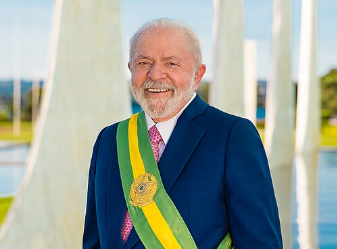
Photo by Planalto Palace from Brasilia, Brazil, via wikimedia commons
44