
The decision to cut interest rates to 3.75% was not just a Christmas gift; it was a rescue operation. The trigger for this urgent action was the release of dismal GDP figures showing the UK economy shrank by 0.1% in October. This contraction marked the fourth successive month without any growth whatsoever, painting a picture of an economy that has ground to a complete halt under the weight of high borrowing costs.
For the five members of the MPC who voted for the cut, this data was undeniable proof that monetary policy was too tight. They argued that the risk of a deep recession now outweighs the risk of inflation. The economy is stalling, construction is down, and retail is struggling. Continuing to squeeze households and businesses with 4% interest rates in the face of this contraction would have been economic malpractice.
The two external members, Swati Dhingra and Alan Taylor, were the loudest voices in the room warning of an “economic downturn.” They suggested that the weakness in consumer spending and the cooling labor market were flashing red lights that the Bank could no longer ignore. Their vote to cut was a vote to put a floor under the collapsing GDP figures before stagnation turns into a slump.
However, the cut comes with a realization that the damage may already be done. Bank forecasters now expect GDP to remain flat for the rest of 2025. This means the UK is effectively losing half a year of economic progress. The hope is that lower rates will kick in during 2026, stimulating investment and consumption, but monetary policy works with a time lag.
This narrative of “saving the economy” contrasts sharply with the “fighting inflation” narrative of the past two years. The priority has shifted. The Bank is no longer just the guardian of the currency; it is now frantically trying to restart the engine of growth. The 3.75% rate is the starter motor; the country is waiting to see if the engine catches.
Four Straight Months of Zero Growth: The Grim GDP Data That Forced the Bank of England to Slash Interest Rates
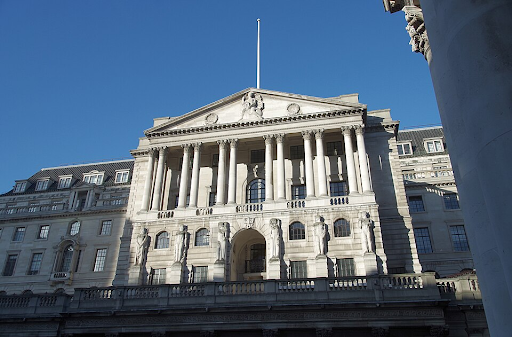
Photo by mattbuck, via wikimedia commons
68