
The Strait of Hormuz blockade is entering its third month with no military solution on the horizon, as President Trump’s appeal for an allied naval coalition has failed to produce concrete commitments from any of the countries he targeted. Trump posted on Truth Social urging the UK, France, China, Japan, South Korea, and all oil-importing nations to send warships to the embattled waterway, claiming many were already preparing to do so. The reality, as each government’s statements have made clear, is that no nation is prepared to deploy warships while the conflict between the US, Israel, and Iran continues to rage.
Iran’s blockade began at the end of February as retaliation for US-Israeli airstrikes and has since created the largest oil supply disruption in the history of the energy industry. The strait ordinarily handles one-fifth of global oil exports, and their prolonged absence from world markets has driven prices sharply higher. Tehran has warned that tankers heading for American, Israeli, or allied ports are legitimate military targets. Sixteen vessels have been struck, and the threat of mine deployment makes the prospect of naval convoy operations increasingly hazardous.
France remains the most committed to non-intervention while fighting continues. Its defence minister was clear that no French ships would be sent. President Macron’s plan for a defensive escort mission is explicitly a post-conflict proposal. The UK confirmed ongoing discussions about mine-hunting drones. Japan described a very high threshold for deployment decisions. South Korea pledged multi-angle review. The EU’s Aspides mission has been proposed for expansion, but Germany’s foreign minister called the existing mission ineffective and expressed serious scepticism about extending its scope.
The economic damage continues to compound. Oil prices have risen dramatically, and nations in Asia and Europe that depend on Gulf crude are experiencing significant economic strain. The sustained closure of one of the world’s busiest shipping routes is disrupting not only energy markets but also the broader trade flows that pass through the strait. The absence of any credible military response has left commercial shipping companies and energy markets in a state of sustained uncertainty that is unlikely to resolve quickly.
China’s diplomatic engagement with Tehran represents one of the most plausible near-term pathways to any form of relief. Beijing is reportedly in discussions with Iran about allowing oil tankers to pass through safely, and the Chinese embassy has confirmed China’s commitment to constructive regional engagement. US Energy Secretary Chris Wright expressed measured optimism about China’s potential to serve as a constructive partner, while acknowledging that the diplomatic process was still underway. The question of whether diplomacy can succeed where military deterrence has failed remains the central uncertainty of the entire Hormuz crisis.
Hormuz Blockade Enters Third Month With No Military Solution in Sight
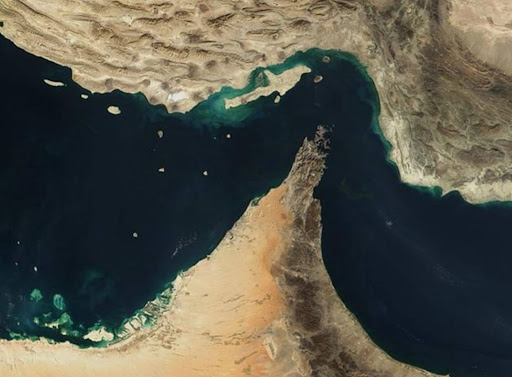
Photo Credit: Jacques Descloitres | NASA via Flickr
43