
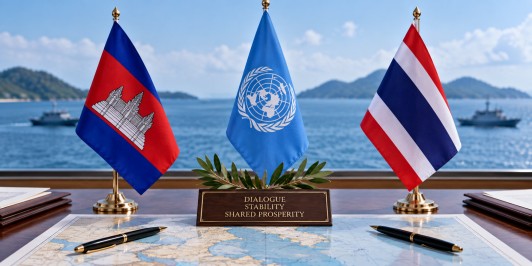
Cambodia and Thailand have embarked on a conciliation process under the auspices of the United Nations to address their longstanding maritime boundary dispute in the Gulf of Thailand. This effort is part of the United Nations Convention on the Law of the Sea (UNCLOS) framework. Both nations’ foreign ministers delivered opening statements marking the first meeting of this important initiative. The discussions aim to resolve a conflict that spans over 26,000 square kilometers of contested waters believed to harbor vast reserves of natural gas and oil, highlighting the economic significance of the issue.
Cambodia is advocating for an agreement to establish a definitive maritime boundary with Thailand. As an alternative, Phnom Penh has suggested a joint development arrangement that would enable both countries to share the resources in the contested area. In response, Thailand has emphasized that the discussions should focus solely on maritime boundary delimitation. Bangkok has confirmed its commitment to participating in the process sincerely, although it had previously preferred to settle the matter through direct negotiations.
The boundary dispute between the two Southeast Asian nations has persisted for more than 25 years. A framework for joint development of the disputed resources was initially set up by an agreement in 2001. However, tensions, including deadly border clashes, led to Thailand terminating this arrangement in May. Consequently, Cambodia initiated the compulsory UNCLOS conciliation process in June, seeking a resolution through international mediation.
The independent panel overseeing the conciliation can propose recommendations, although these findings will not be legally binding for either party. The ongoing process represents a significant step towards potentially resolving a complex and economically critical dispute in the region. Both countries’ engagement in this UN-backed initiative underscores a willingness to explore diplomatic avenues to address their differences over the resource-rich maritime area.