
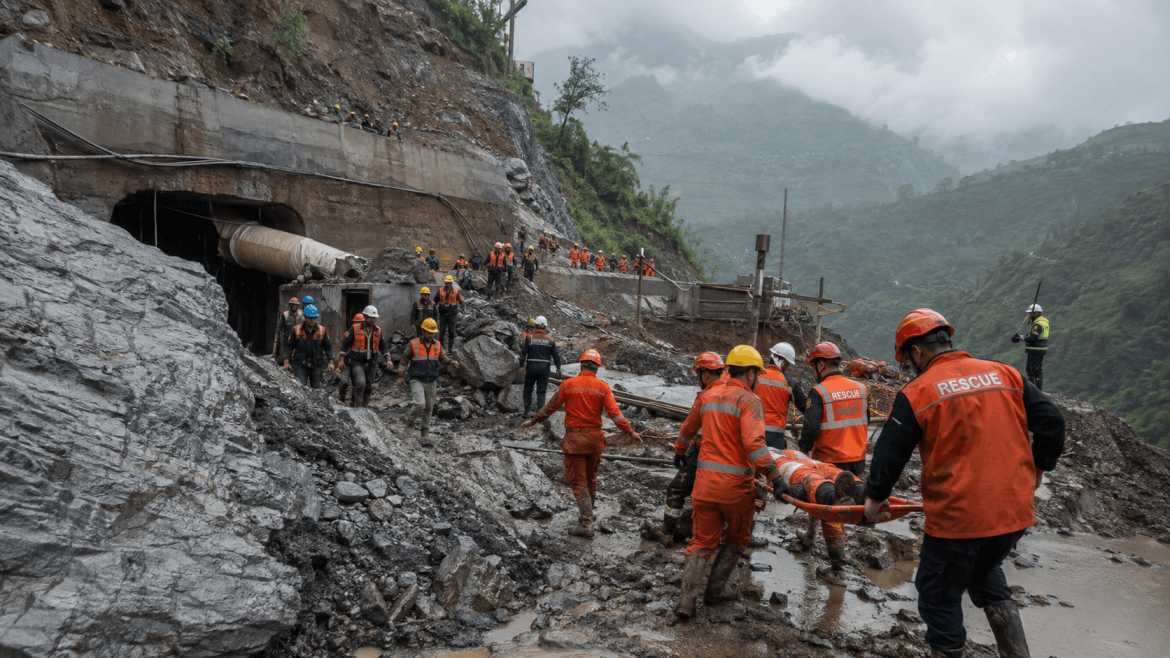
In the wake of catastrophic flash floods that ravaged regions of Nepal, rescue teams are racing against time to reach over 900 hydropower workers feared trapped in underground tunnels. The disaster, which struck last week, has pushed the death toll in Nepal to nearly 940, with additional fatalities reported in neighboring Tibet. Thousands of individuals remain unaccounted for on both sides of the border. Among those missing, around 500 workers are believed to be stuck in tunnels at hydropower sites in the severely affected districts of Rasuwa and Nuwakot. As rescue operations intensify, experts caution that diminishing oxygen levels within these tunnels are reducing the chances of survival for those trapped. Survivors who escaped the flooding reported that many of their colleagues were still inside when the deluge hit.
The rescue mission has faced significant challenges, including destroyed bridges, unpredictable river flooding, and treacherous terrain, leading crews to heavily depend on helicopters. Neighboring countries have provided temporary bridge equipment to aid in restoring access. The task of reopening blocked tunnels is further complicated by massive debris, and blasting operations have been employed at some sites to reach those trapped. The floods have also resulted in a substantial loss of the nation’s power generation capacity. Inside the tunnels, rescuers encountered grueling conditions, with mud reaching chest height and visibility severely limited. Despite these difficulties, there is cautious optimism that some workers might have found refuge in safe zones within the tunnel systems.
The disaster has had a sweeping impact, affecting tens of thousands of people and obliterating entire communities. It has also sparked renewed discussions about the potential destabilizing effects of climate change on glacial and mountainous regions. Nepal’s leadership has described the flooding as an unprecedented natural disaster, mobilizing tens of thousands of security personnel and volunteers in the response effort. International aid has been significant, with specialized rescue teams, funding, and technical assistance arriving from neighboring countries, underscoring the magnitude of the crisis. In a rare moment of hope amid the devastation, rescuers were able to save a young child from the mud.
Moreover, concerns have been raised regarding the flow of critical glacial and water-level data between neighboring countries. Some officials fear that gaps in information-sharing could impair future disaster preparedness and response efforts in the region. As rescue operations continue, the focus remains on reaching those trapped and providing relief to the affected communities while addressing these broader issues.