
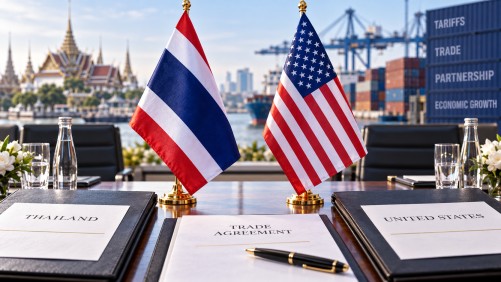
Thailand’s exporters may soon find relief from potential tariff hikes as the country works to solidify a reciprocal trade agreement with the United States. This agreement, if reached, aims to provide Thai businesses with more stable market access and protection against increases in duties that could impact their competitiveness.
The ongoing negotiations are centered around the Agreement on Reciprocal Trade (ART), with Thai officials actively addressing unresolved issues. The urgency stems from Thailand’s current exposure to a 12.5% tariff under the US Section 301 measure, which targets imports produced with forced labor. Additionally, a US inquiry into structural excess production capacity, initiated in March 2026, could further escalate tariffs on Thai exports.
Thai authorities have submitted evidence contesting US claims regarding excess production capacity and alleged transshipment of goods. They argue that the capacity in key sectors is higher than US estimates, seeking to update Washington’s assessment to reflect more accurate data. The goal is to align Thailand’s tariff treatment with that of regional peers like Malaysia and Indonesia, thereby enhancing its competitive edge.
In the broader scope of the agreement, the ART would not only address tariffs but also tackle US concerns over trade barriers, investment, and market access in Thailand. Although a timeline for the deal’s conclusion remains open, any finalized agreement would require ratification through Thailand’s domestic processes before implementation.
Prime Minister Anutin Charnvirakul is expected to discuss these trade negotiations further with US President Donald Trump, underscoring the significance of the bilateral relationship and the mutual benefits of resolving these trade issues. The anticipated agreement holds the promise of greater certainty and improved market conditions for Thai exporters operating in the US market.